Entry Systems has a full line of major manufacturer's garage door remote controls and remote controlled gate openers. Clickers are available for purchase in our Laguna Hills office.
We can help you find the right replacement remote for your garage door opener or automatic gate. We offer single button remotes, two button remotes, three button remotes, four button remotes, keychain mini remotes, and other various sizes and designs. Here are some examples:
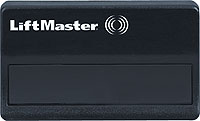
MODEL 371LM
Security+® Single-Button Remote Control - 315MHz
• |
Directional visor clip included |
• |
5-year 3V lithium battery included |
• |
Features Security+® rolling code technology |
• |
Compatible with LiftMaster® Security+® garage Door Openers and Radio Controls |
|
 |
 |
 |
Liftmaster Model 371LM-Single One Button Remote Control
• |
Features Security+ Rolling Code Technology |
• |
315MHz |
• |
Directional visor clip included |
• |
5-year 3V lithium battery included |
• |
Compatible with LiftMaster Security+ garage door openers and radio controls |
|
|
|
|
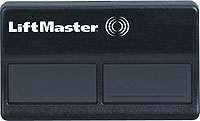
Liftmaster Model 372LM-Two Button Remote Control
• |
Features Security+ Rolling Code Technology |
• |
315MHz |
• |
Directional visor clip included |
• |
Two 5-year 3V lithium batteries included |
• |
Compatible with LiftMaster Security+ garage door openers and radio controls |
|
|
 |
|
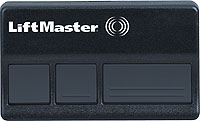
Liftmaster Model 373LM-Three Button Remote Control
• |
Features Security+ Rolling Code Technology |
• |
315MHz |
• |
Directional visor clip included |
• |
Two 5-year 3V lithium batteries included |
• |
Compatible with LiftMaster Security+ garage door openers and radio controls |
|
|
 |
|
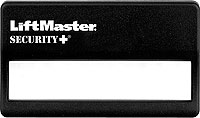
Liftmaster Model 971LM-Single One Button Remote Control
• |
Features Security+ Rolling Code Technology |
• |
390MHz |
• |
Directional visor clip included |
• |
5-year 3V lithium battery included |
• |
Compatible with LiftMaster Security+ garage door openers and radio controls |
|
|
 |
|
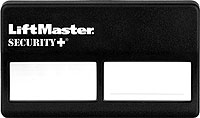
Liftmaster Model 972LM-Two Button Remote Control
• |
Features Security+ Rolling Code Technology |
• |
390MHz |
• |
Directional visor clip included |
• |
Two 5-year 3V lithium batteries included |
• |
Compatible with LiftMaster Security+ garage door openers and radio controls |
|
|
 |
|
Liftmaster Model 973-Three Button Remote Control
• |
Features Security+ Rolling Code Technology |
• |
390MHz |
• |
Directional visor clip included |
• |
Two 5-year 3V lithium batteries included |
• |
Compatible with LiftMaster Security+ garage door openers and radio controls |
|
|
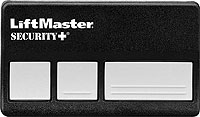 |
|
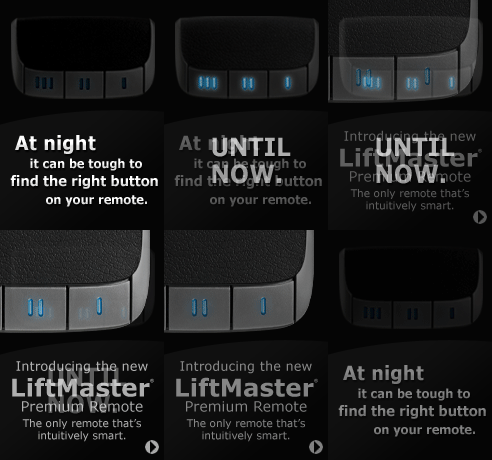
Premium Remote:
Never fumble in the dark for your garage door remote control again. The new LiftMaster Premium Remote Control is the only remote control that automatically lights up as you bring your hand nearby, so you'll always know exactly which button to press, even in the dark. Plus, it can control up to three garage door openers or gate operators from greater distances with narrowband radio technology and the reassurance of Security+ anti-theft technology.
|
|
|
|
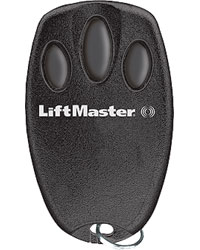
Mini 3-Button Remote Control:
Are you always on the go? Our mini 3-button remote control is a miniature version of our 3-button remote control, and just as powerful. It can open and close 3 garage doors or gates, turn opener lights on/off, and/or turn on lights and small appliances in your home. And the best part is that it can fit almost anywhere – in your purse, your pocket, or even on your keychain. It features Security+ rolling code technology that sends a brand new code every time it is used, keeping you, your family, and your belongings safe and secure.
|
|
 |
|
History:
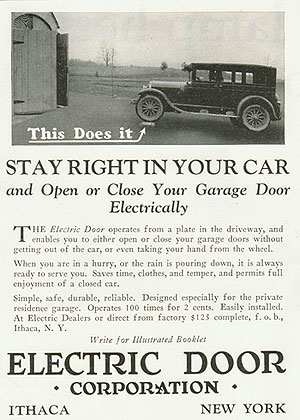 With the advent of the automobile in the early Twentieth Century, the need to protect this expensive machine arose. Not unlike the carriage house that was used to house the buggy of yesteryear, the garage became the likely home to the automobile. Yet the individual was still bothered by having to get out of his vehicle (especially in inclement weather) and open the garage door. As technology increased, many devices were used to enhance the ease of accessibility of the car into the garage. What has become the primary method of operating the door is by using a contrivance known by various names such as clickers, garage genie, a genie remote control, keyless entry remotes, etc. Throughout the garage door industry it is known as a transmitter. This keyless remote is primarily a hand held device which is powered by a small battery which emits an inaudible radio frequency when a small button on the transmitter is depressed. The radio frequency is picked up by another electronic piece of equipment known as the remote receiver. Early receivers were very bulky: approximately twelve inches by twelve inches and had to be installed in the rafters of garages or awkwardly attached to the motor housing of the garage door operator. These early receivers were powered by large tubes which were reliable yet bulky. Today receivers have undergone major improvements: the greatest of these would have to be the development of the transistor which allows for much smaller boards within which to place the receiver components. This resulted in moving the receivers inside the motor housing of the garage door operators. The garage door remote was also to take on many smaller cases such as the key ring style and mini remote style. In order for there to be some distinction which prevented a neighbor’s transmitter from operating another’s garage, the garage remote control was given the capability of being tuned to each individual garage door opener. Up until the late 1980’s some transmitters could still be hand tuned in an attempt to give the consumer security. But, this method of security proved to be inadequate for two reasons. First, because of mass production the cost of garage door openers became more affordable. Now that this scientific marvel was accessible to more and more people there was less distinction in radio frequency. Neighbors began inadvertently opening each other’s garage doors, removing the security that a locked garage door was supposed to provide. The other problem was that any unscrupulous individual could walk or drive down the street stealing the code and gaining access to a victim’s garage. In order to provide greater security the industry came up with a binary or trinary switch system. The multicode transmitter was one of the first of this generation of remote transmitter. This method of moving switches gave a new code scheme of tuning radio frequency to approximately ten thousand variations. In order to prevent false openings (i.e. air planes flying overhead etc.), the Chamberlain remote 81 LM was developed. The Chamberlain transmitter that could also be used as a gate remote control came with a fixed frequency set at the factory that could be programmed into the remote receiver upon installation of the garage door operator. This new technology boasted over one billion preset variations to the radio frequency of the opener remote. This garage opener remote control also known as a Liftmaster remote answered the problem of random false openings but did little to prevent criminals from using a device known as a “code grabber” from stealing the radio frequency as a homeowner closed their garage door as they left home. To combat this method of literally driving into a victim’s home and robbing them, the industry came up with rolling code technology. This is the latest method to give the consumer greater security. Each transmitter has to be programmed into the receiver using the “smart’ or “learn” button. Only these transmitters will activate this receiver. From this point on, every time the Liftmaster transmitter button is depressed the frequency will change in the transmitter and in the receiver. Even if a criminal is able to lock on or grab the frequency the receiver will not recognize the frequency or activate the garage door because the thief’s frequency was never initially programmed into the receiver thus it will never be able to change with the receiver. With the advent of the automobile in the early Twentieth Century, the need to protect this expensive machine arose. Not unlike the carriage house that was used to house the buggy of yesteryear, the garage became the likely home to the automobile. Yet the individual was still bothered by having to get out of his vehicle (especially in inclement weather) and open the garage door. As technology increased, many devices were used to enhance the ease of accessibility of the car into the garage. What has become the primary method of operating the door is by using a contrivance known by various names such as clickers, garage genie, a genie remote control, keyless entry remotes, etc. Throughout the garage door industry it is known as a transmitter. This keyless remote is primarily a hand held device which is powered by a small battery which emits an inaudible radio frequency when a small button on the transmitter is depressed. The radio frequency is picked up by another electronic piece of equipment known as the remote receiver. Early receivers were very bulky: approximately twelve inches by twelve inches and had to be installed in the rafters of garages or awkwardly attached to the motor housing of the garage door operator. These early receivers were powered by large tubes which were reliable yet bulky. Today receivers have undergone major improvements: the greatest of these would have to be the development of the transistor which allows for much smaller boards within which to place the receiver components. This resulted in moving the receivers inside the motor housing of the garage door operators. The garage door remote was also to take on many smaller cases such as the key ring style and mini remote style. In order for there to be some distinction which prevented a neighbor’s transmitter from operating another’s garage, the garage remote control was given the capability of being tuned to each individual garage door opener. Up until the late 1980’s some transmitters could still be hand tuned in an attempt to give the consumer security. But, this method of security proved to be inadequate for two reasons. First, because of mass production the cost of garage door openers became more affordable. Now that this scientific marvel was accessible to more and more people there was less distinction in radio frequency. Neighbors began inadvertently opening each other’s garage doors, removing the security that a locked garage door was supposed to provide. The other problem was that any unscrupulous individual could walk or drive down the street stealing the code and gaining access to a victim’s garage. In order to provide greater security the industry came up with a binary or trinary switch system. The multicode transmitter was one of the first of this generation of remote transmitter. This method of moving switches gave a new code scheme of tuning radio frequency to approximately ten thousand variations. In order to prevent false openings (i.e. air planes flying overhead etc.), the Chamberlain remote 81 LM was developed. The Chamberlain transmitter that could also be used as a gate remote control came with a fixed frequency set at the factory that could be programmed into the remote receiver upon installation of the garage door operator. This new technology boasted over one billion preset variations to the radio frequency of the opener remote. This garage opener remote control also known as a Liftmaster remote answered the problem of random false openings but did little to prevent criminals from using a device known as a “code grabber” from stealing the radio frequency as a homeowner closed their garage door as they left home. To combat this method of literally driving into a victim’s home and robbing them, the industry came up with rolling code technology. This is the latest method to give the consumer greater security. Each transmitter has to be programmed into the receiver using the “smart’ or “learn” button. Only these transmitters will activate this receiver. From this point on, every time the Liftmaster transmitter button is depressed the frequency will change in the transmitter and in the receiver. Even if a criminal is able to lock on or grab the frequency the receiver will not recognize the frequency or activate the garage door because the thief’s frequency was never initially programmed into the receiver thus it will never be able to change with the receiver.
Replacement Remotes Available:
Often due to loss or damage a replacement remote may be necessary. Many people, after losing their garage or gate remote may have difficulty obtaining a replacement for that specific product because some brands, (Stanley is an example) no longer manufacturer garage door transmitters. The answer to this dilemma is to purchase a universal garage remote control. The universal transmitter has the capability to accept the coding of not only a Stanley transmitter but a Genie remote control as well. Upon reading the remote programming found with the universal garage door remote control the homeowner should be able to program his garage remote control replacement. Over the years there have been many attempts at manufacturing an effective universal access control remote. The garage door “Clicker” has been an example of this. This garage remote control replacement proved to be frustrating because after reading the extensive instructions for the remote and coding it properly, the remote transmitter frequency sometimes would simply drift from the original programming. This resulted in the transmitter no longer working. The gate/ garage door opener that has had the best results with the universal remote programming of garage transmitters has been the Chamberlain remote control. Time and again we have used these remotes -whether it is for an electric gate remote control such as a Linear transmitter or a Genie transmitter with absolutely no frequency loss. Another option that many contemporary cars have is a built in garage remote control known as the Homelink transmitter. This built in garage opener remote control has the capability to receive a Liftmaster remote control, a Stanley garage door transmitter, Genie garage door opener remotes, or virtually any keyless transmitter. Security and ease of use of garage and gate remote controls is now a reality in the twenty first century.
Major manufacturers we stock include: |
| |
• |
Allstar Remotes |
• |
Allister / Pulsar Remotes |
• |
Carper Remotes |
• |
Challenger Remotes |
• |
Clicker Remotes |
• |
DigiCode Remotes |
• |
DKS Remotes |
• |
DoorKing Remotes |
• |
Eagle Remotes |
• |
Elite Remotes |
• |
Genie Remotes |
• |
Holmes Remotes |
|
|
• |
Liftmaster Remotes |
• |
Linear Remotes |
• |
Marantec Remotes |
• |
Moore-O-Matic Remotes |
• |
Multicode (Multi-code)Remotes |
• |
Raynor Remotes |
• |
Sears Craftsman Remotes |
• |
Sentex Remotes |
• |
Skylink Remotes |
• |
Stanley Remotes |
• |
Universal Remotes |
|
|